01 - Selected Work
Principle Suite
St John's Wood, London NW8
Spatial Reconfiguration
A focused study within a lateral apartment, exploring the reorganisation of the principal suite as part of a wider renovation.
The proposal establishes a clear spatial hierarchy across bedroom, dressing room and en suite.
02 — Existing Condition
Existing Condition
Scope
Principal suite: Bedroom, Dressing room and En-suite
Stages
Concept, Design development, Technical package
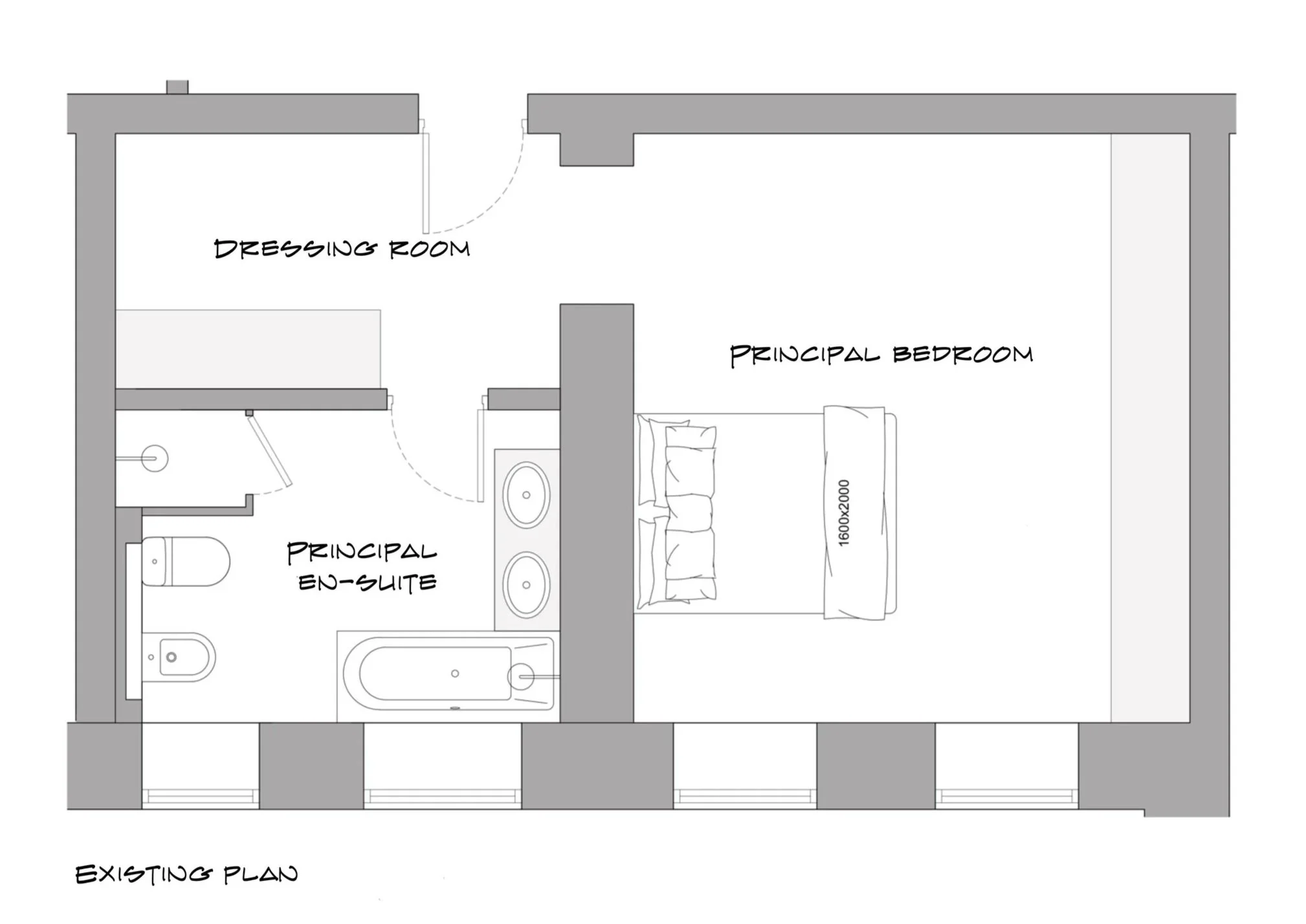
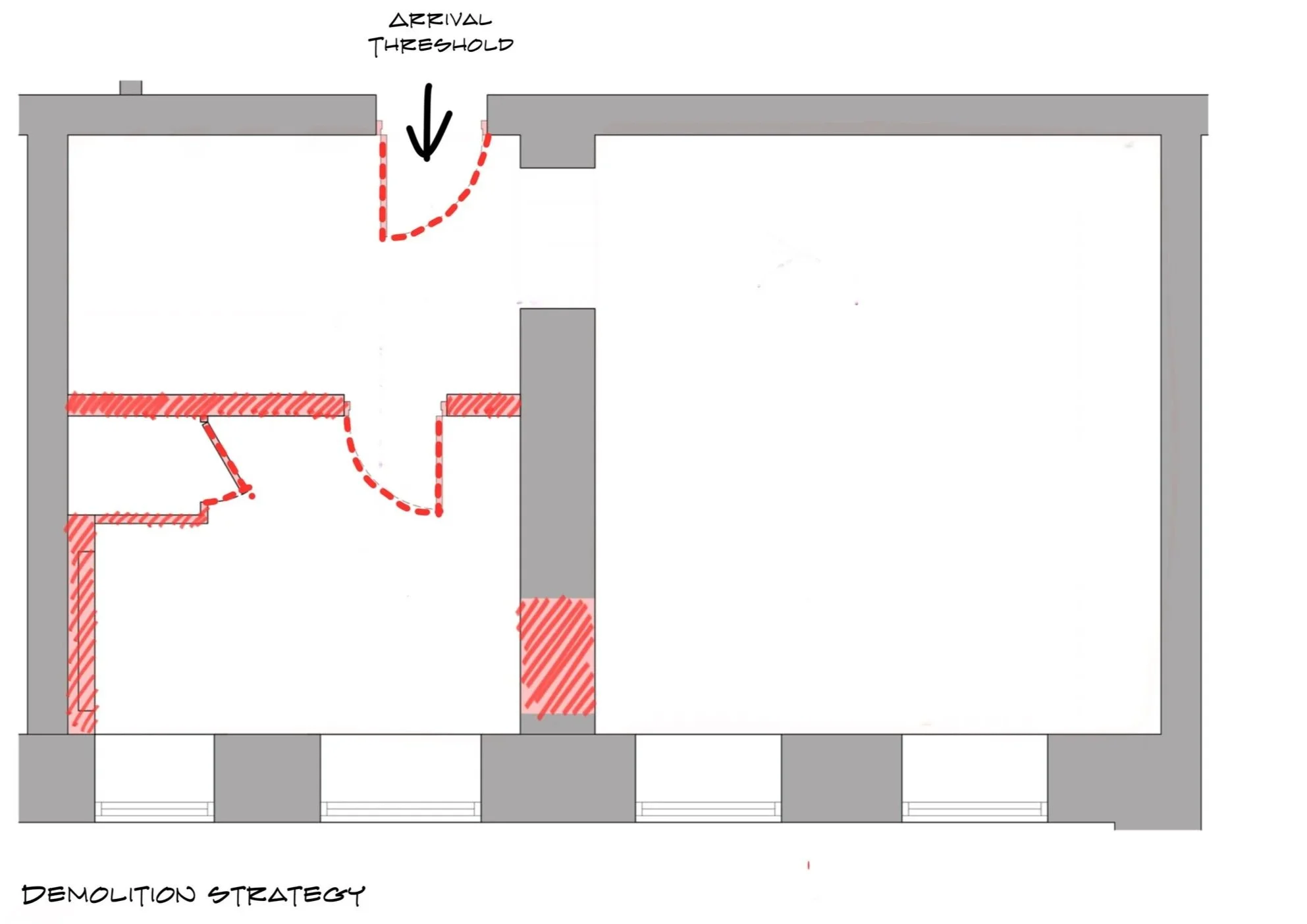
The existing layout occupied the full width of the plan but lacked clarity in organisation.
The dressing room was undersized, circulation to the en suite was indirect, and the bedroom lacked a defined hierarchy.
While proportion and natural light were strong, the arrangement failed to use the volume effectively.
-
The room is south facing, with consistent natural light throughout the day.
This established a fixed condition within the scheme, requiring the layout and joinery to respond to light rather than compete with it.
Light was treated as a governing condition, not an applied layer.
-
The design began with a close reading of the existing architecture.
Structure, window positions and ceiling height established the framework for intervention.The proposal focuses on alignment and reduction, removing unnecessary movement and resolving each element in relation to the overall composition.
All architectural elements and joinery were developed to construction level prior to material selection.
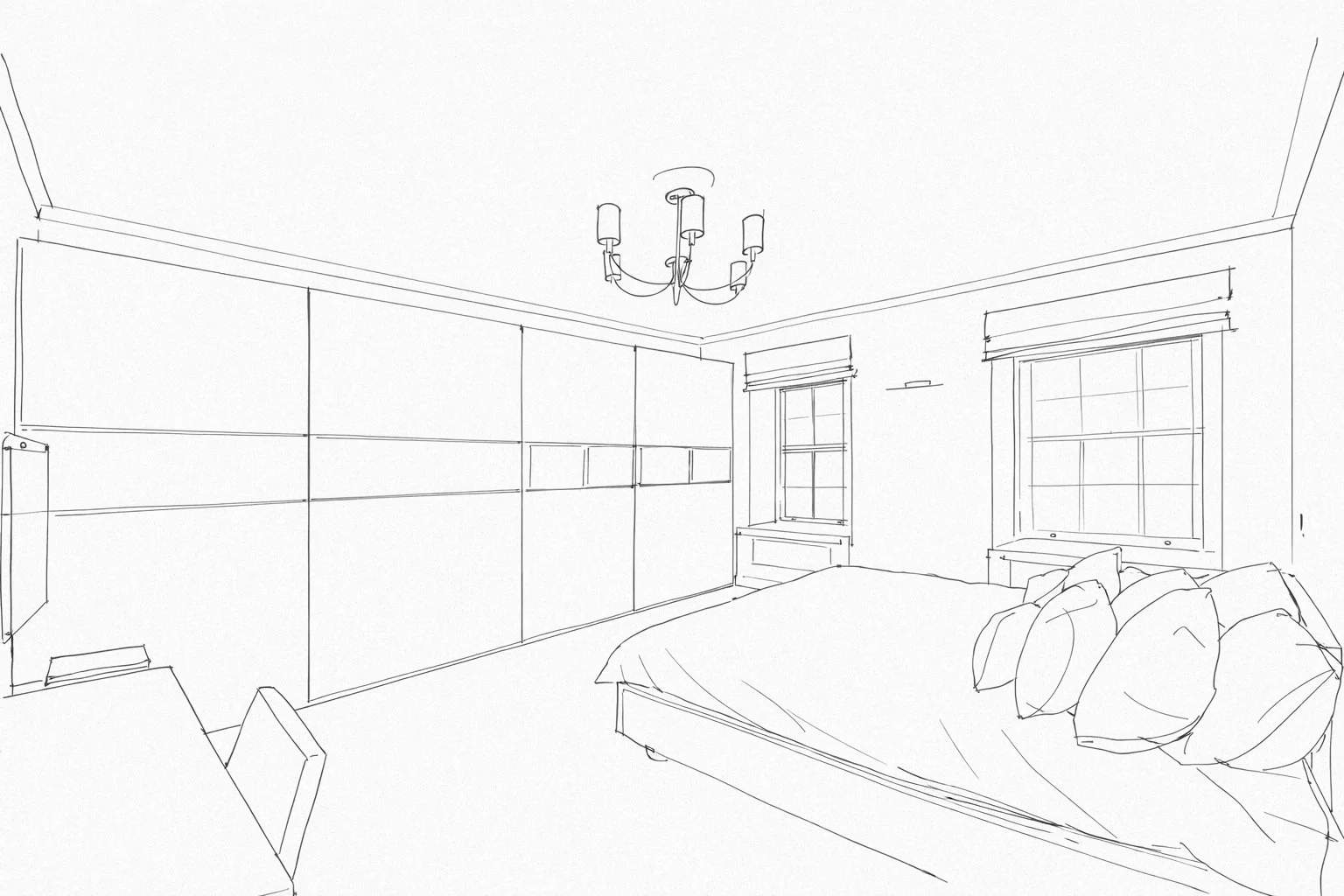
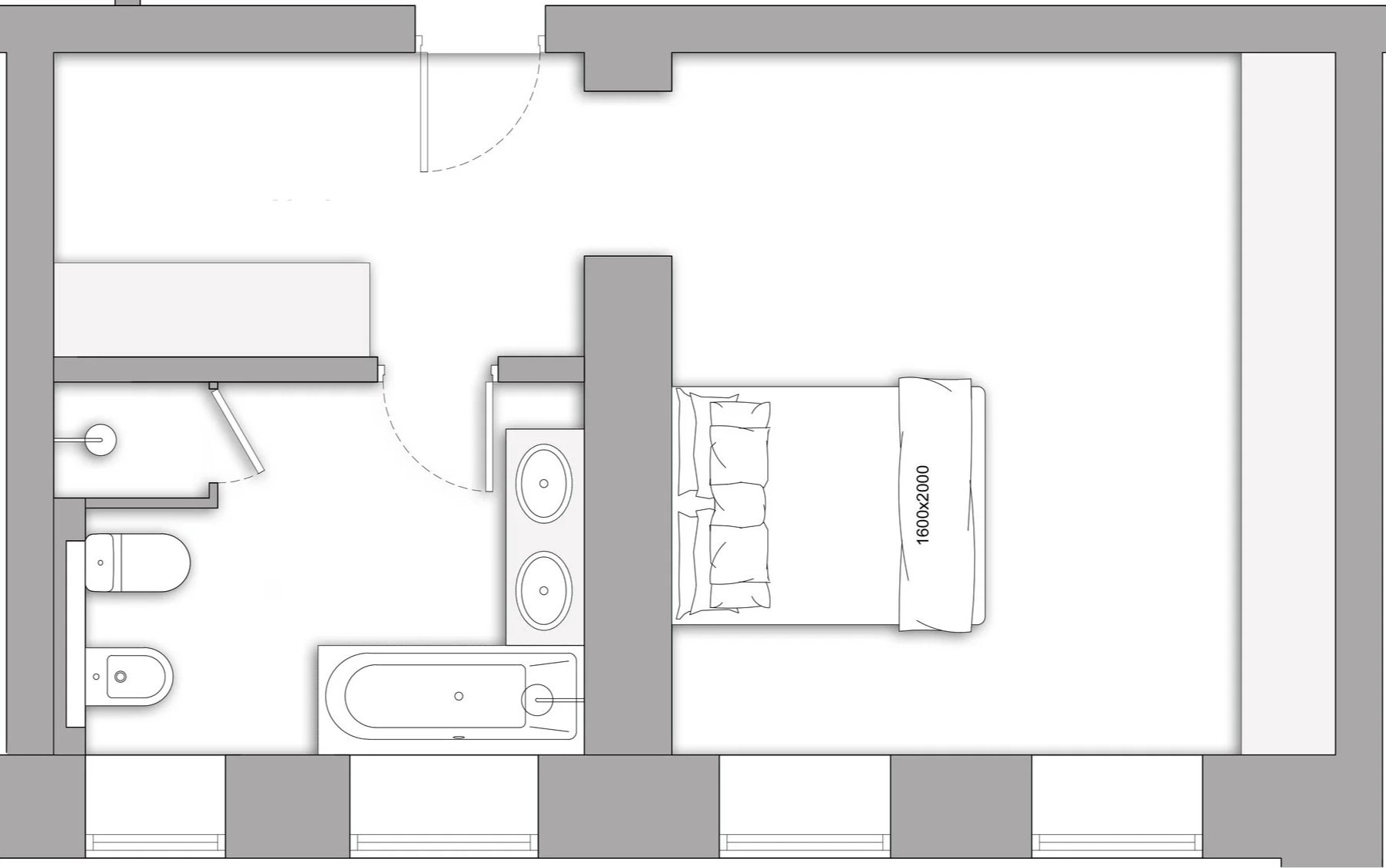
Existing Layout
03 — Design Intent
Project Brief
The project focuses on reordering the principal suite to improve clarity, movement and spatial balance.
The intention is to create a calm, legible arrangement where each space is clearly defined and appropriately scaled.
The focus is on architecture rather than applied decoration.
04 — Spatial Strategy
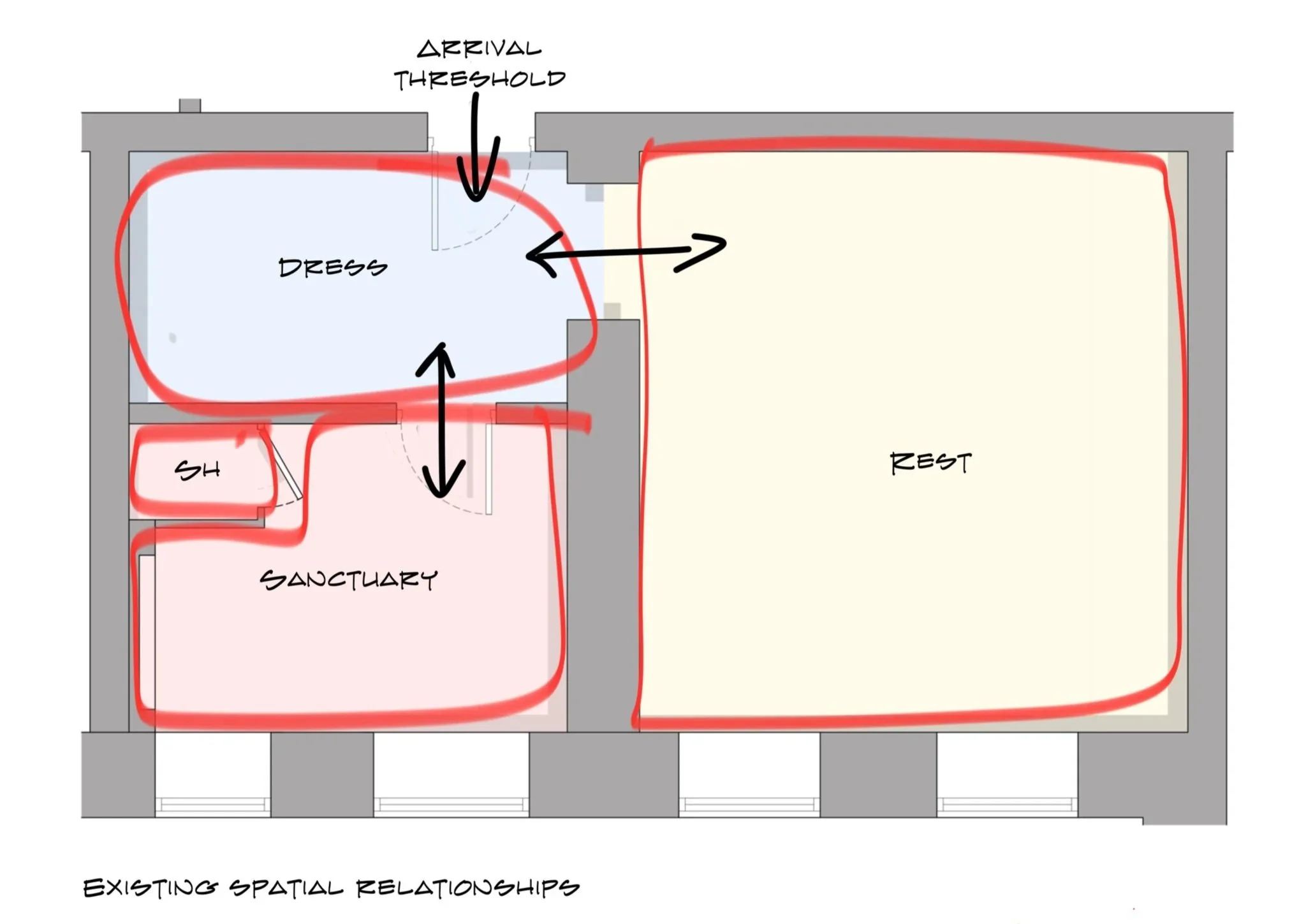
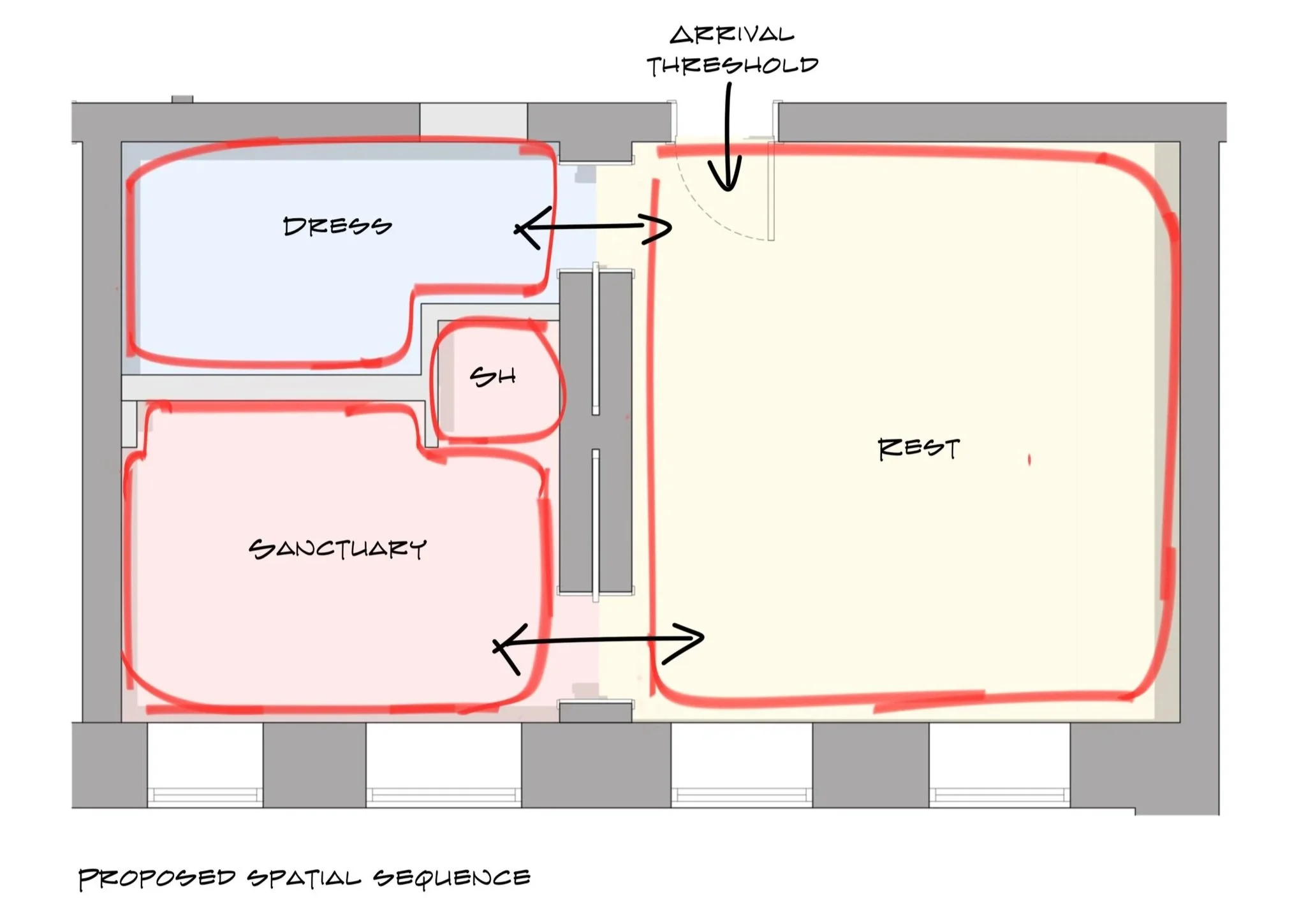
Dress → Rest → Sanctuary
The suite is organised as a sequence of spaces, moving from dressing to bedroom and into the en suite.
Each zone is defined through shifts in enclosure, material and threshold, creating controlled transitions while maintaining continuity.
05 — Spatial Development
Layout Resolution
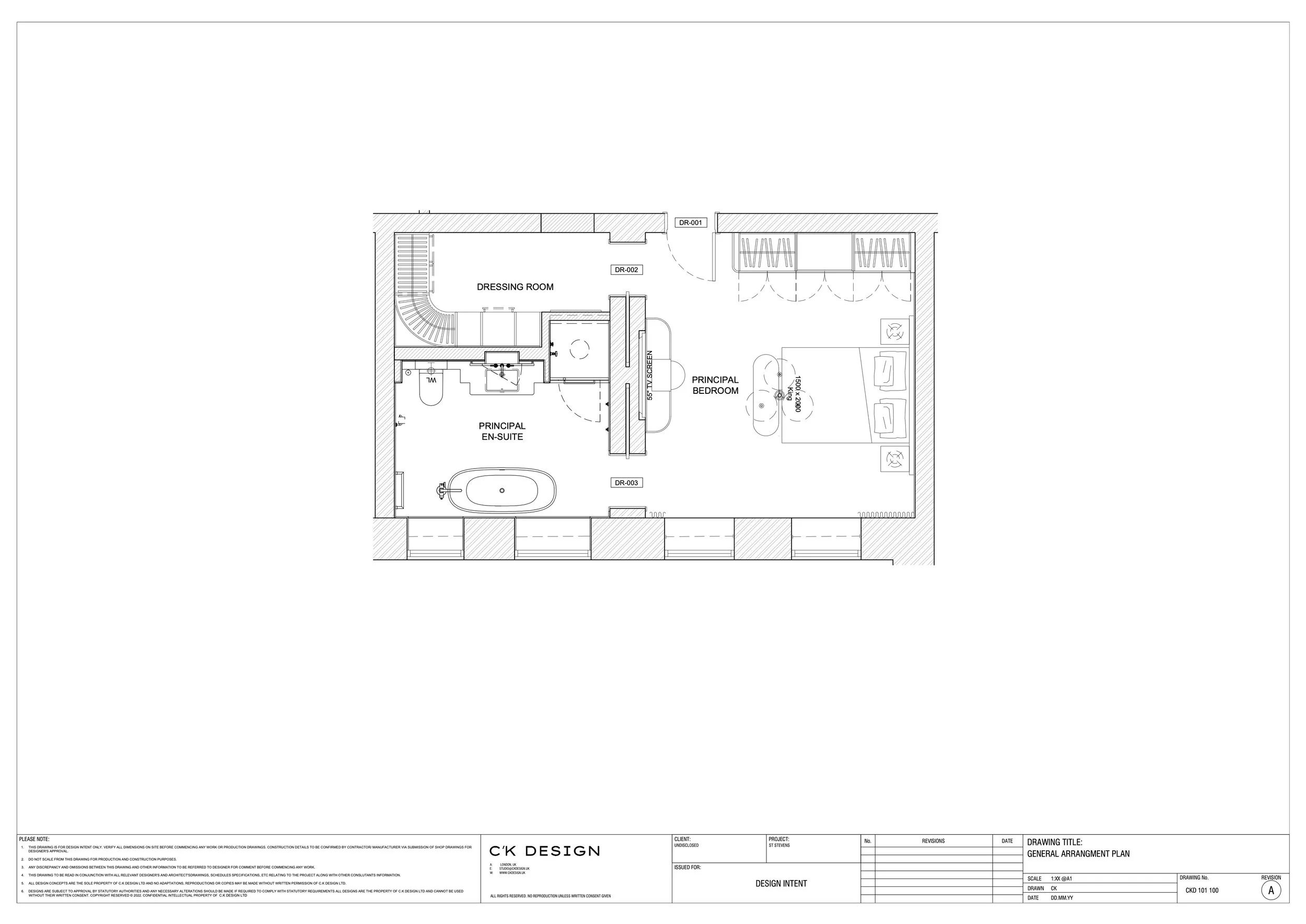
❋ The layout is reconfigured to establish direct circulation and improve usable area within each zone.
❋ The dressing room is expanded, the bedroom centred, and the en suite aligned with the overall plan.
❋ The result is a coherent arrangement that is efficient and buildable.
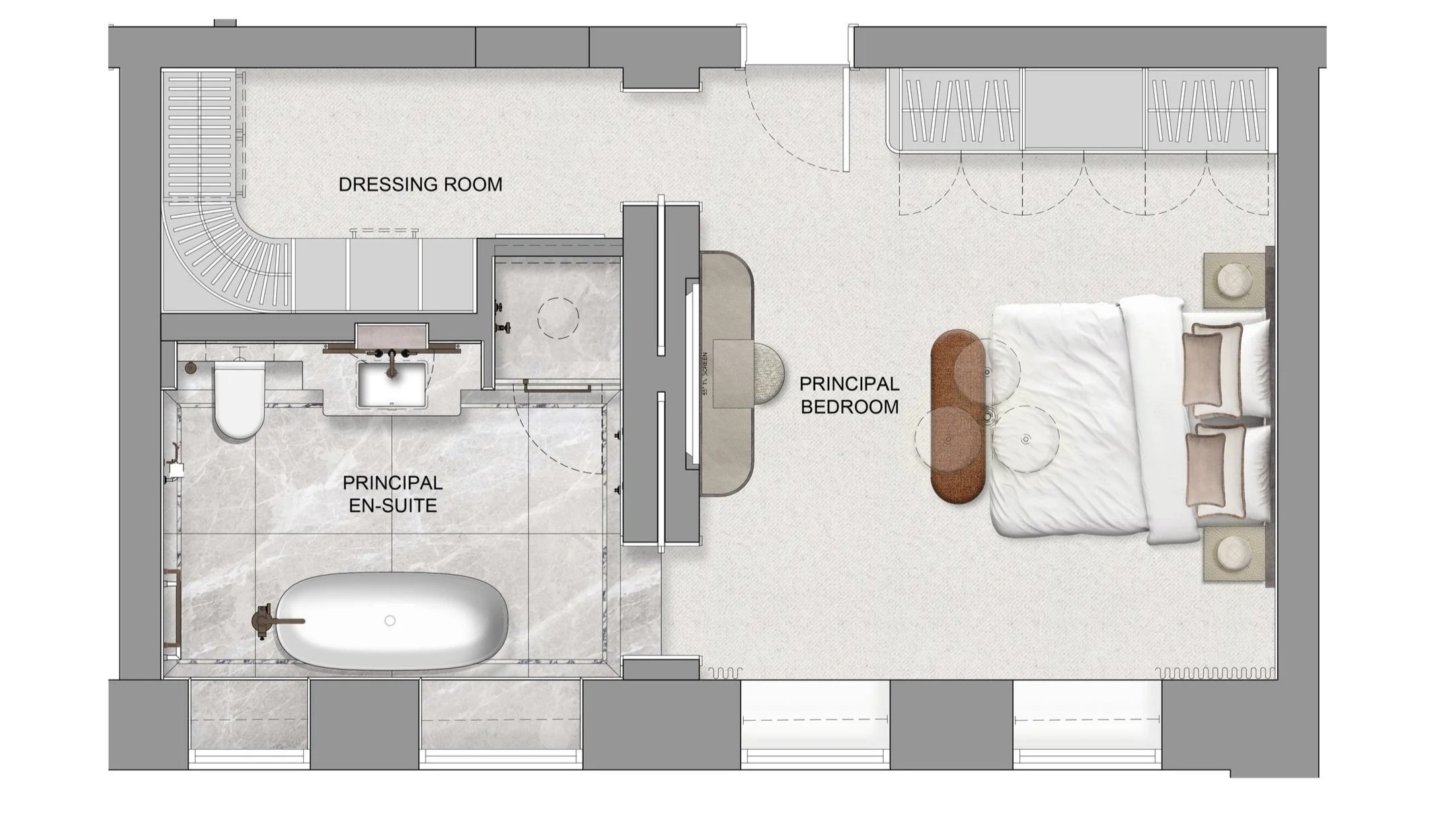
Principal suite — proposed layout
05 - Material Strategy
Material Selection
Materials are developed as part of the architecture, not applied to it.
Each finish is selected for its performance within the space, light response, tactility and buildability before aesthetic expression.
The palette is intentionally restrained.
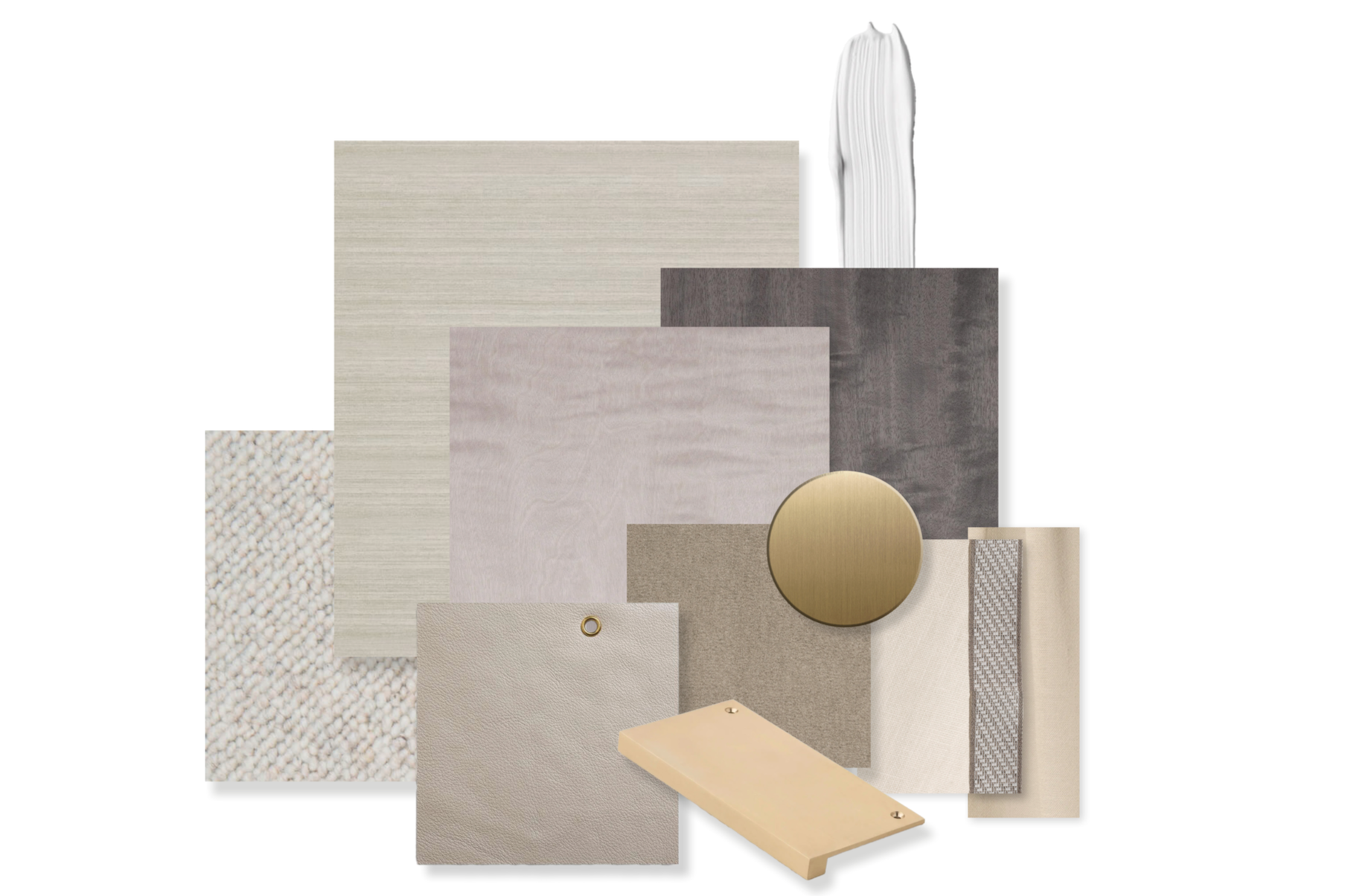
Principal Bedroom & Dressing
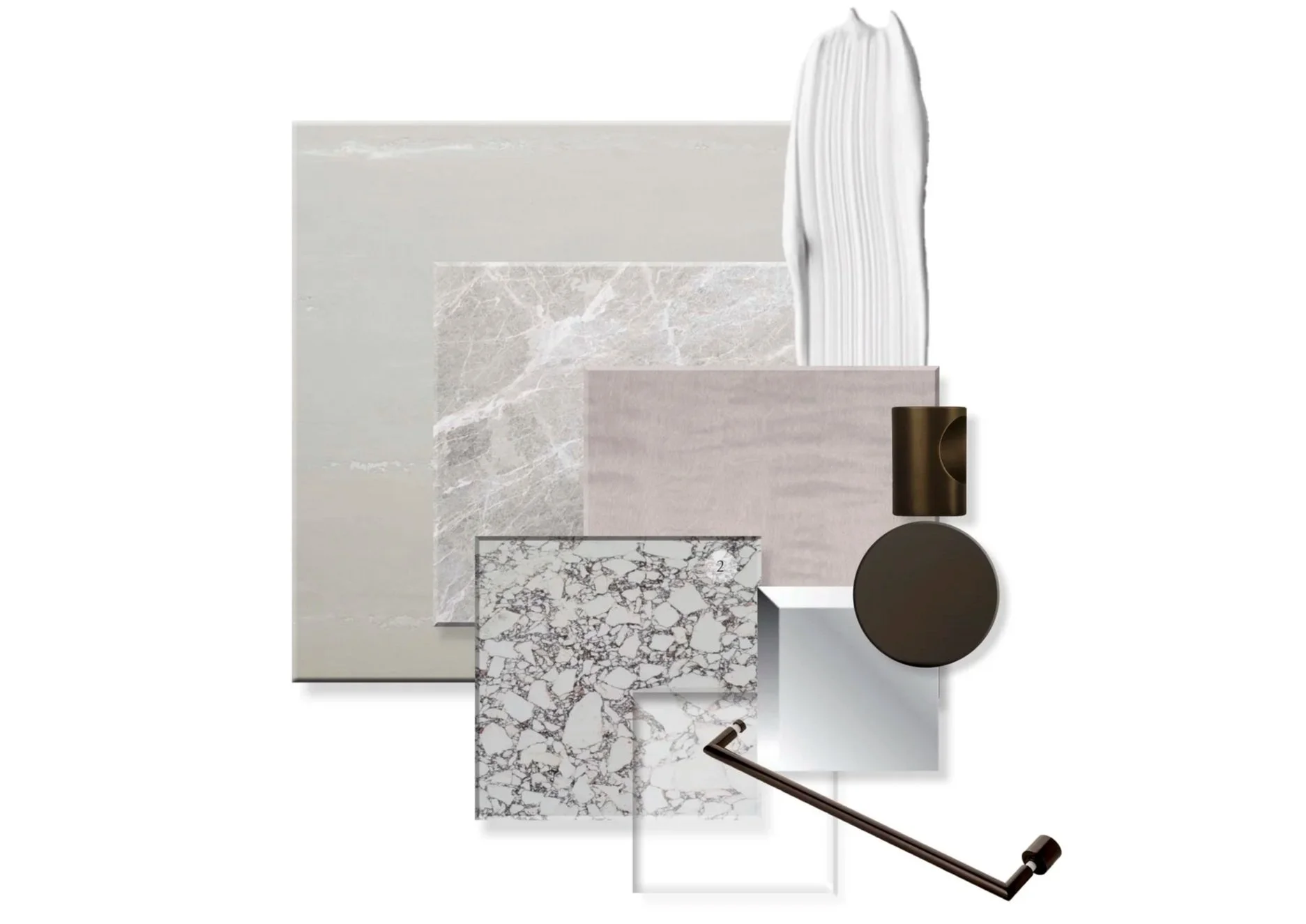
Principal En-suite
06 — Spatial Experience
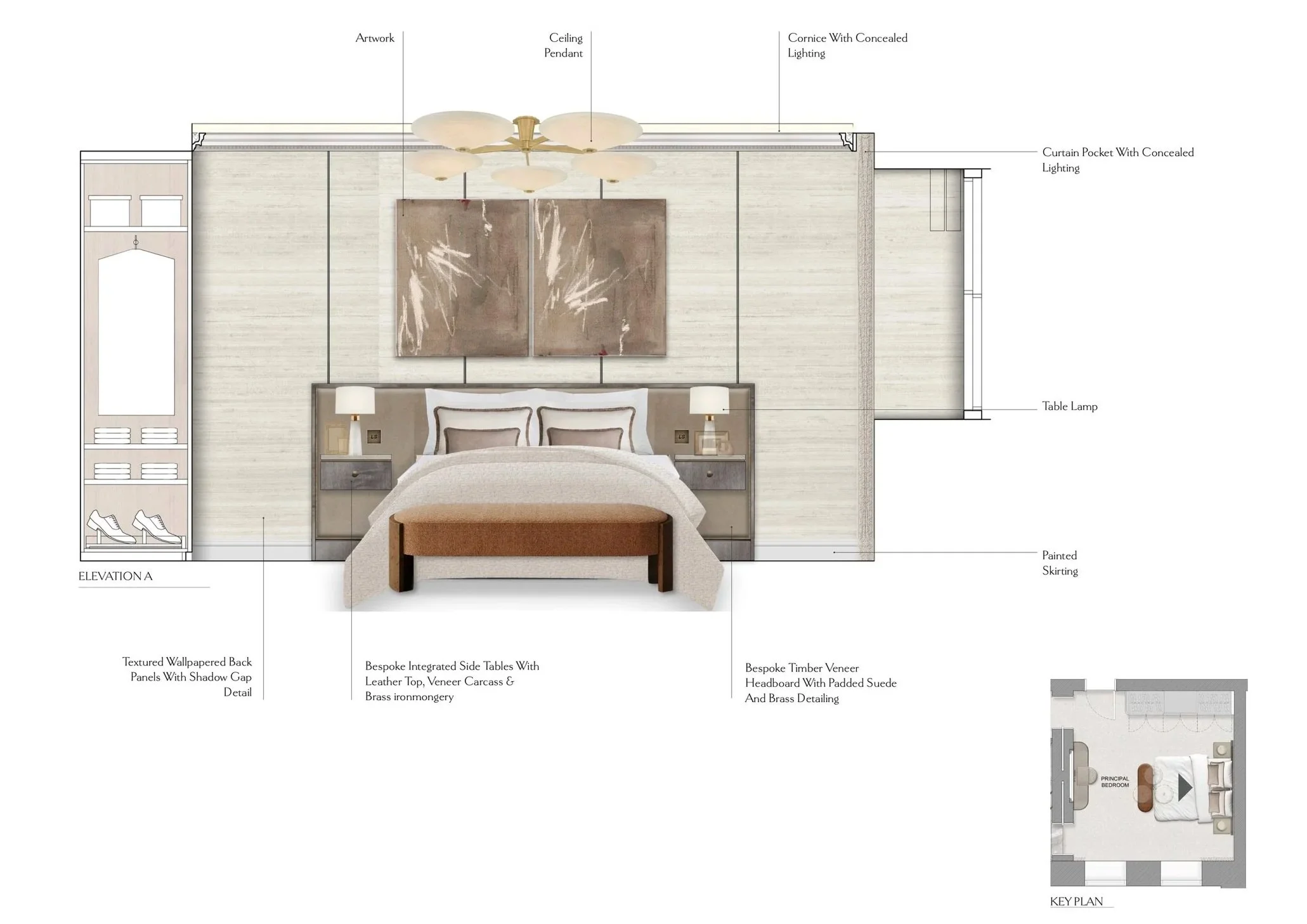
Principal Bedroom
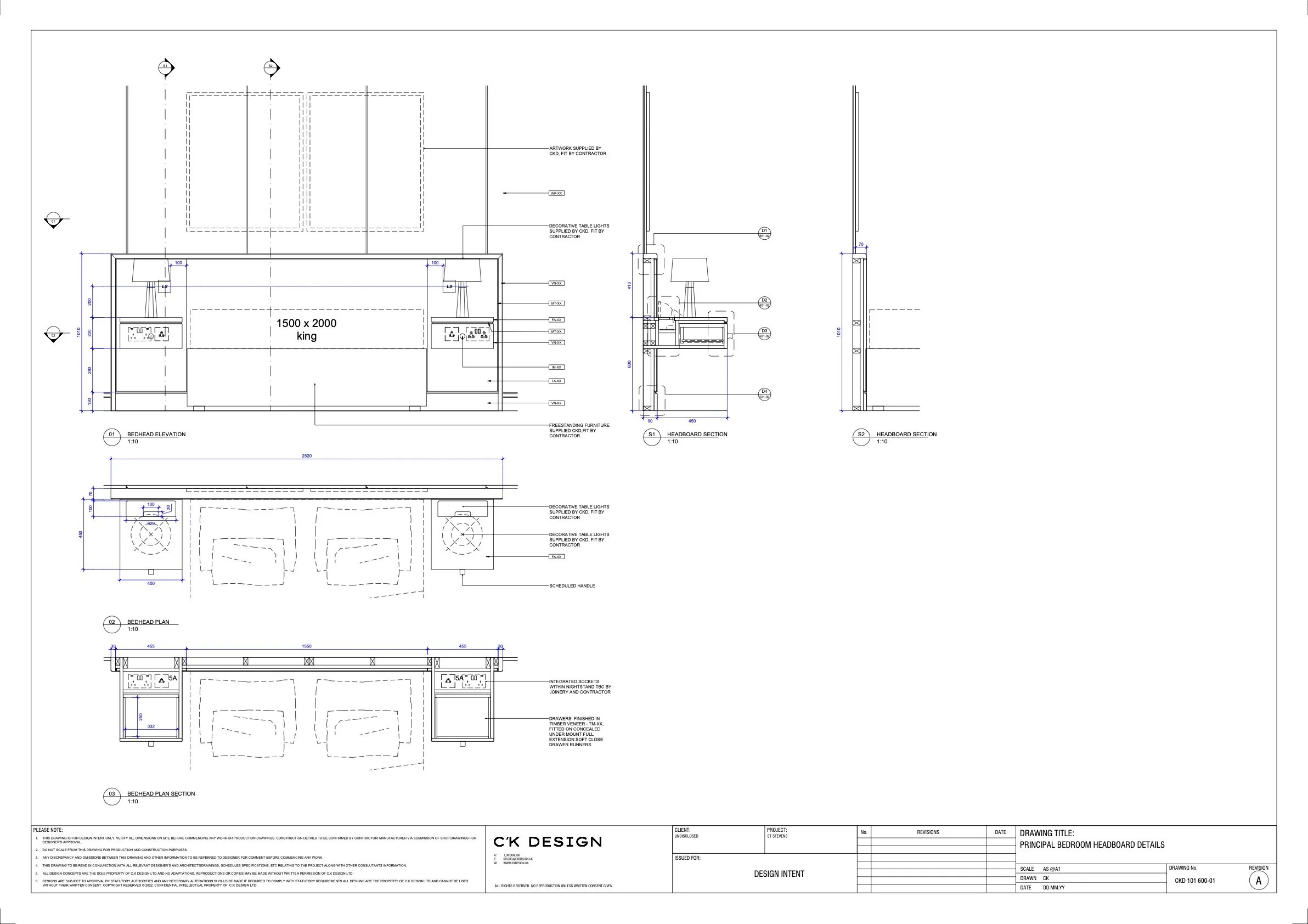
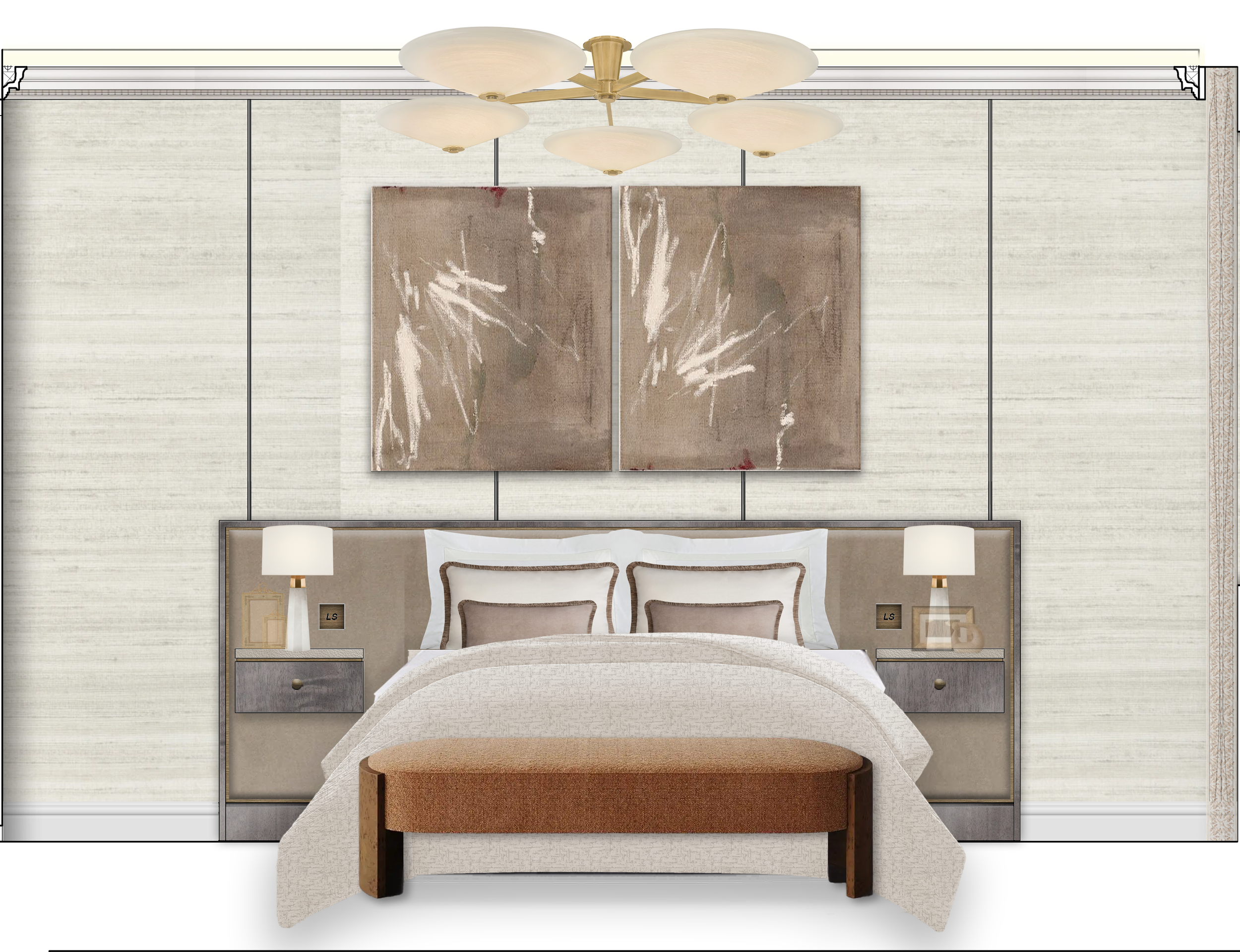
Headboard Wall
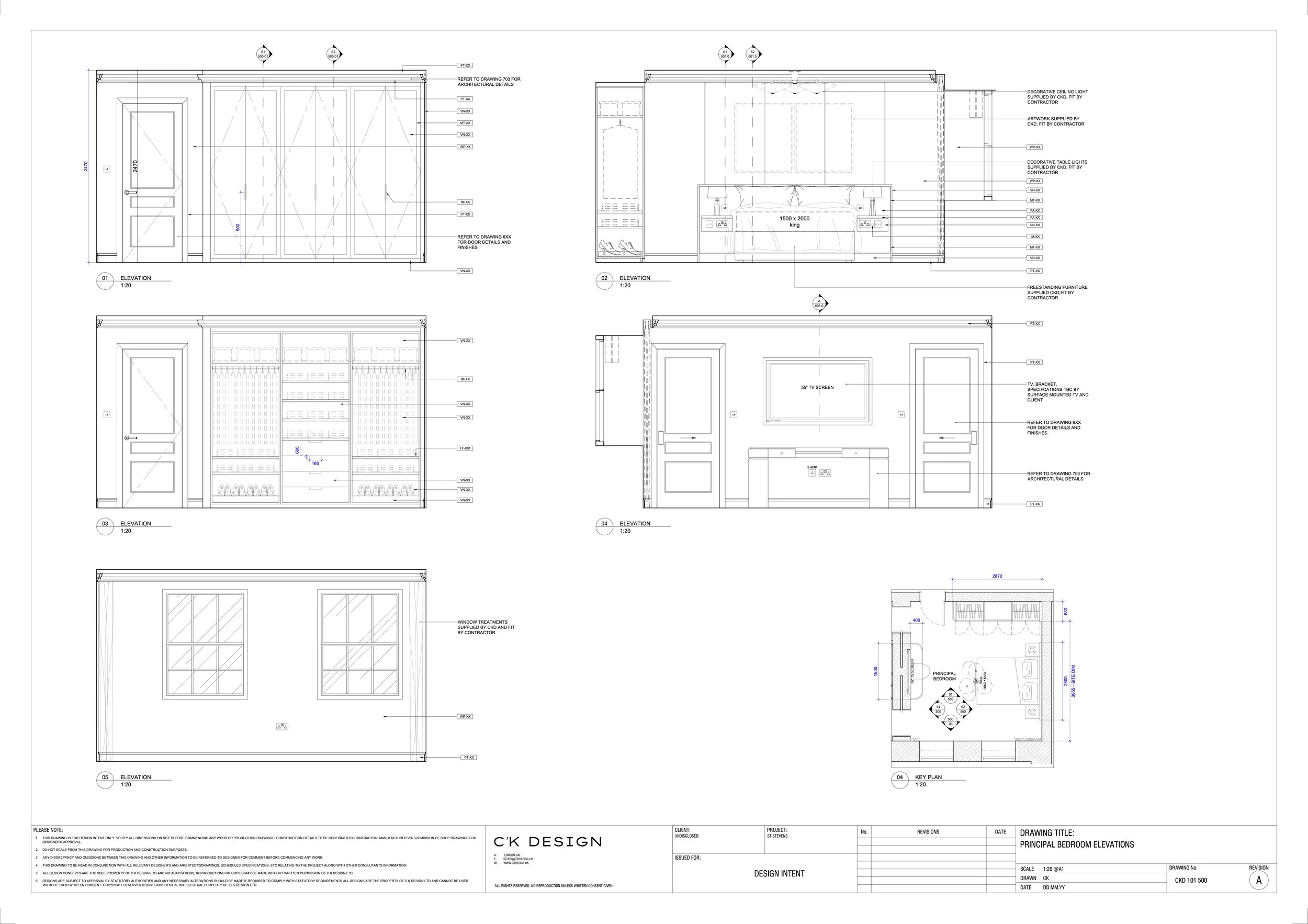
The bed establishes the primary focal point within the room, anchoring the overall composition.
Bespoke Joinery is integrated to reduce visual clutter and resolve proportion across the elevation.
Lighting is layered into the architecture, with concealed sources softening the wall and reinforcing balance.
07 — Spatial Experience
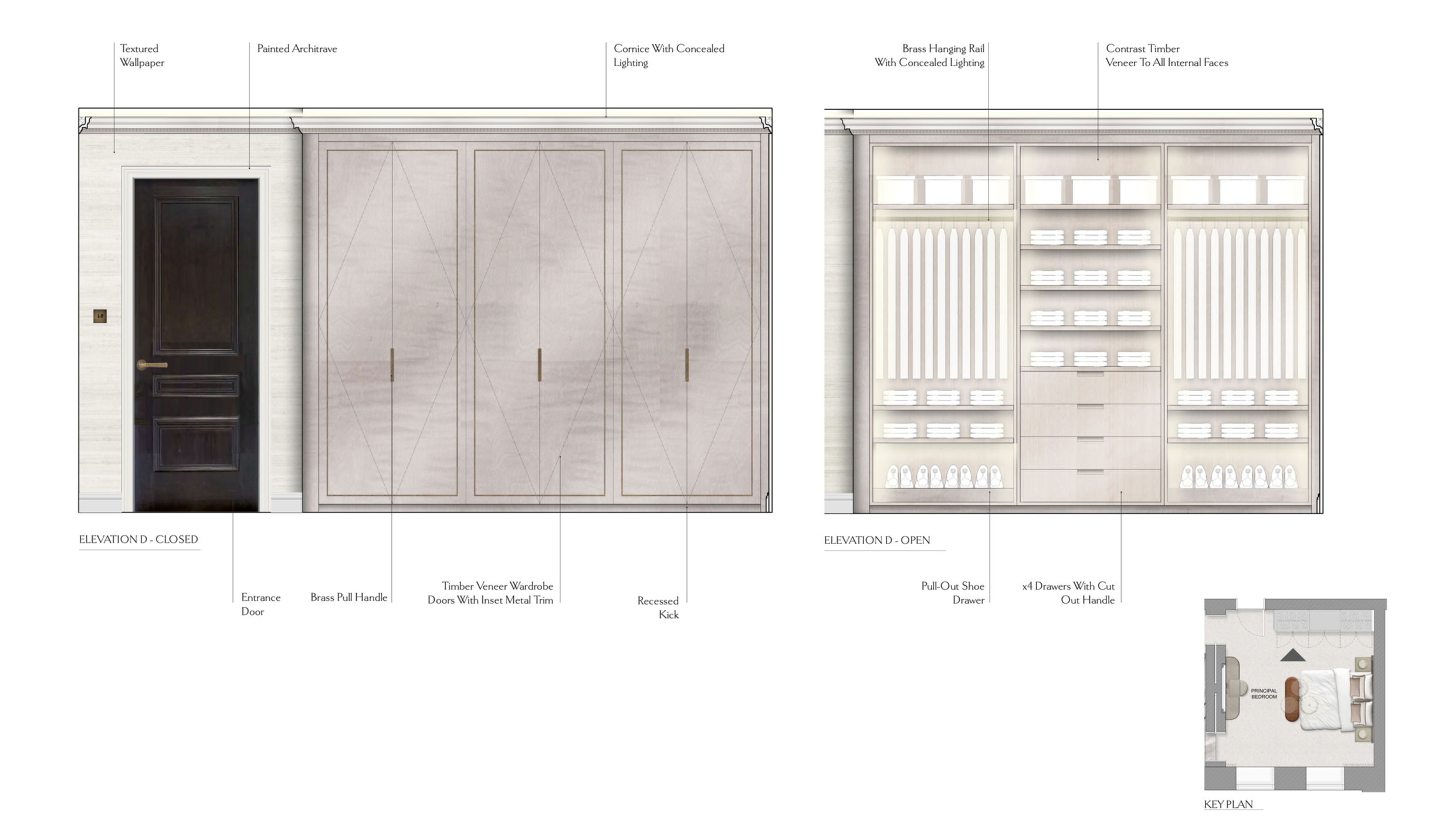
Principal Bedroom
Wardrobe Wall
Storage is resolved as a continuous architectural element rather than a series of units. Door proportions are aligned to the room geometry, creating a calm and ordered elevation.
Internal layouts are designed to maximise usable storage while maintaining a consistent external expression.
08 — Spatial Experience
Principal Bedroom
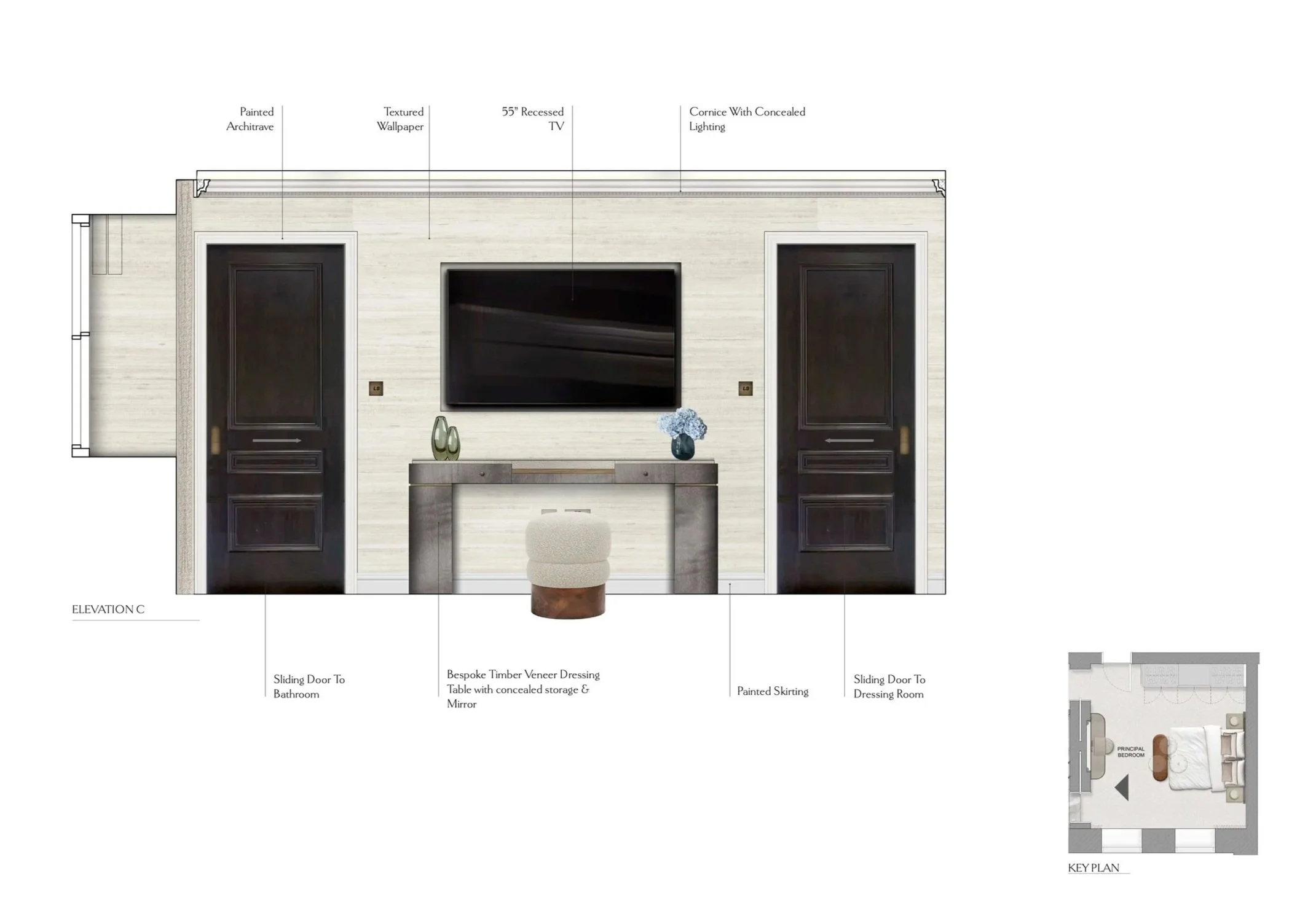
Tv Wall
The central wall forms two thresholds, connecting the bedroom to the dressing area and en suite beyond.
A bespoke dressing table is integrated into the elevation, with the TV recessed into the wall to sit flush within the composition.
The wall anchors the room, balancing openness with a degree of separation between spaces.
09 — Spatial Experience
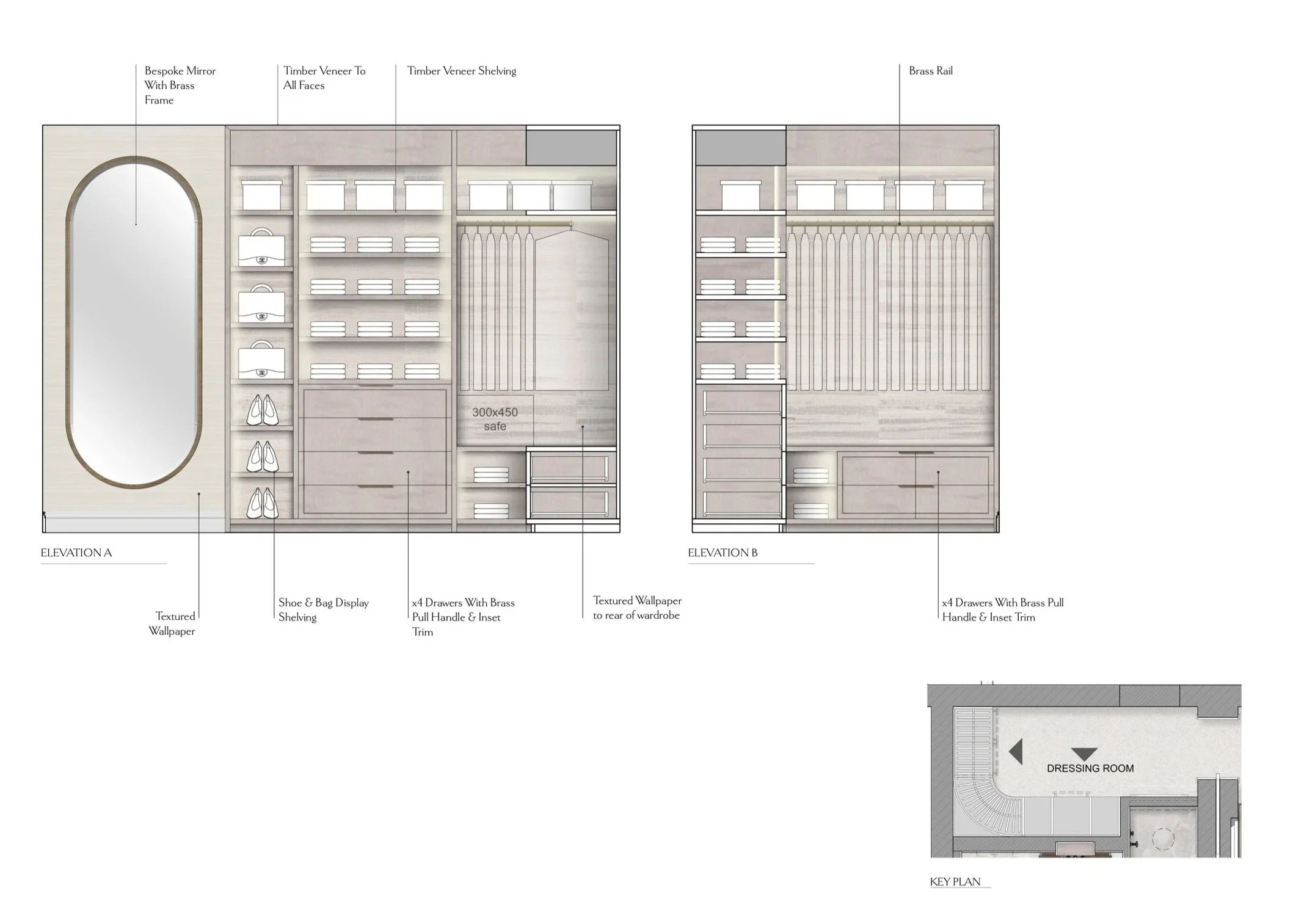
Principal Dressing
Joinery Wall
The dressing area extends the bedroom joinery, increasing storage without introducing visual fragmentation.
A controlled framework organises hanging, shelving and drawers, allowing multiple functions to be integrated within a single, coherent elevation.
This forms the first part of the suite sequence, transitioning from dressing into the bedroom.
10 — FF&E
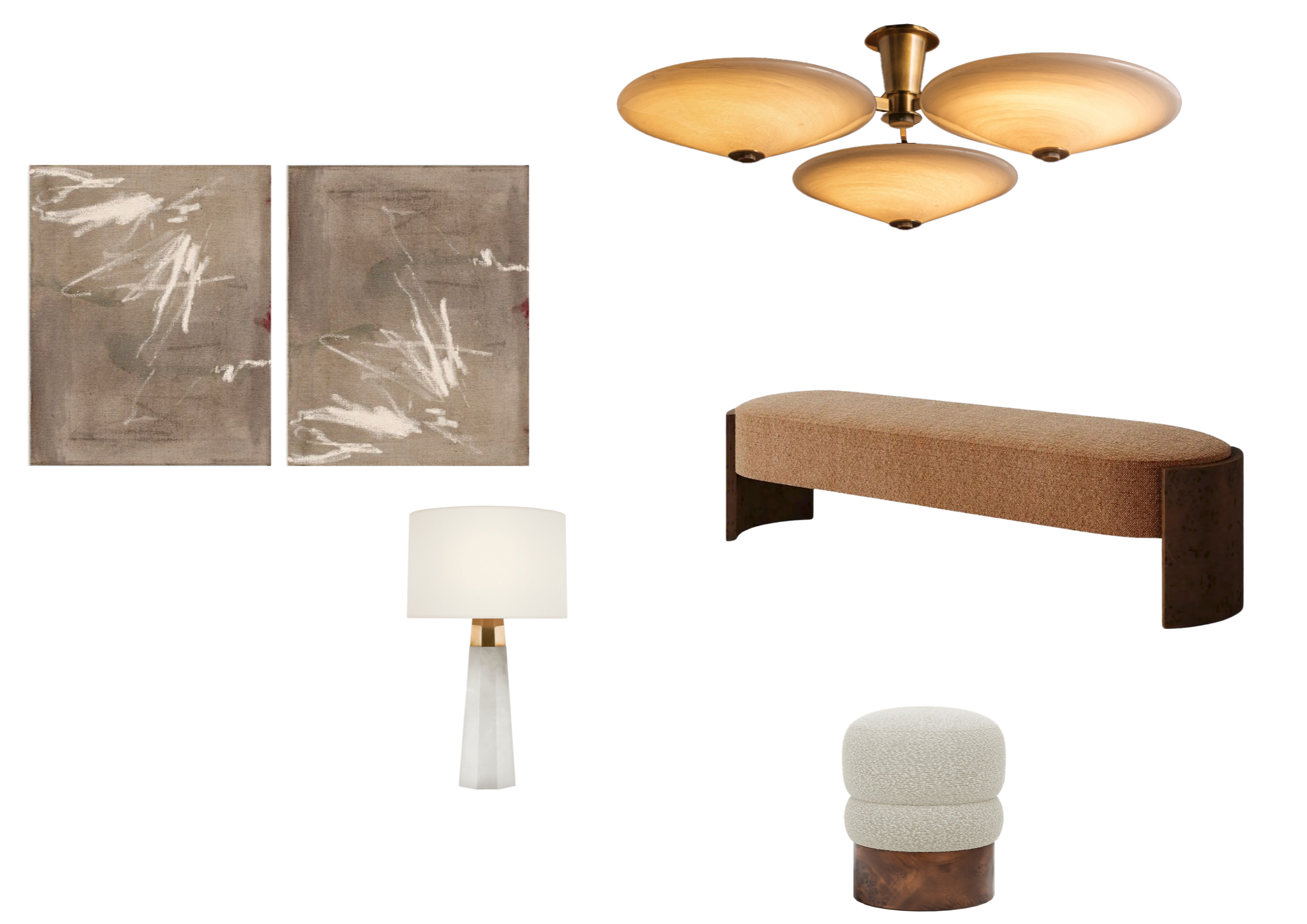
FF&E Design
Loose elements are introduced to support the architectural framework rather than compete with it.
Selection is driven by proportion, alignment and material continuity, ensuring each piece sits naturally within the composition.
FF&E is resolved as part of the architecture, not applied to it.
11 — Spatial Experience
Principal En-suite
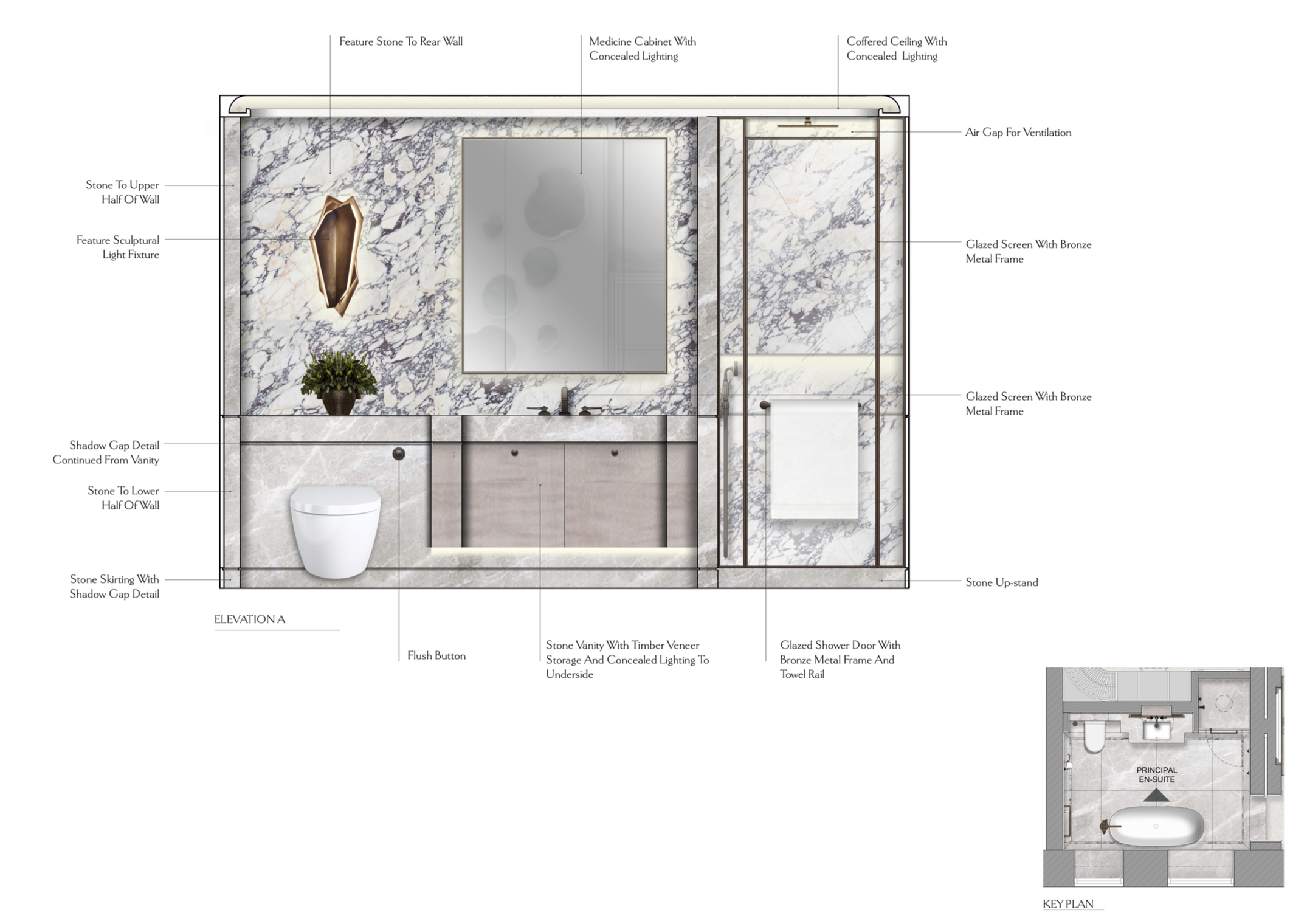
Vanity Wall
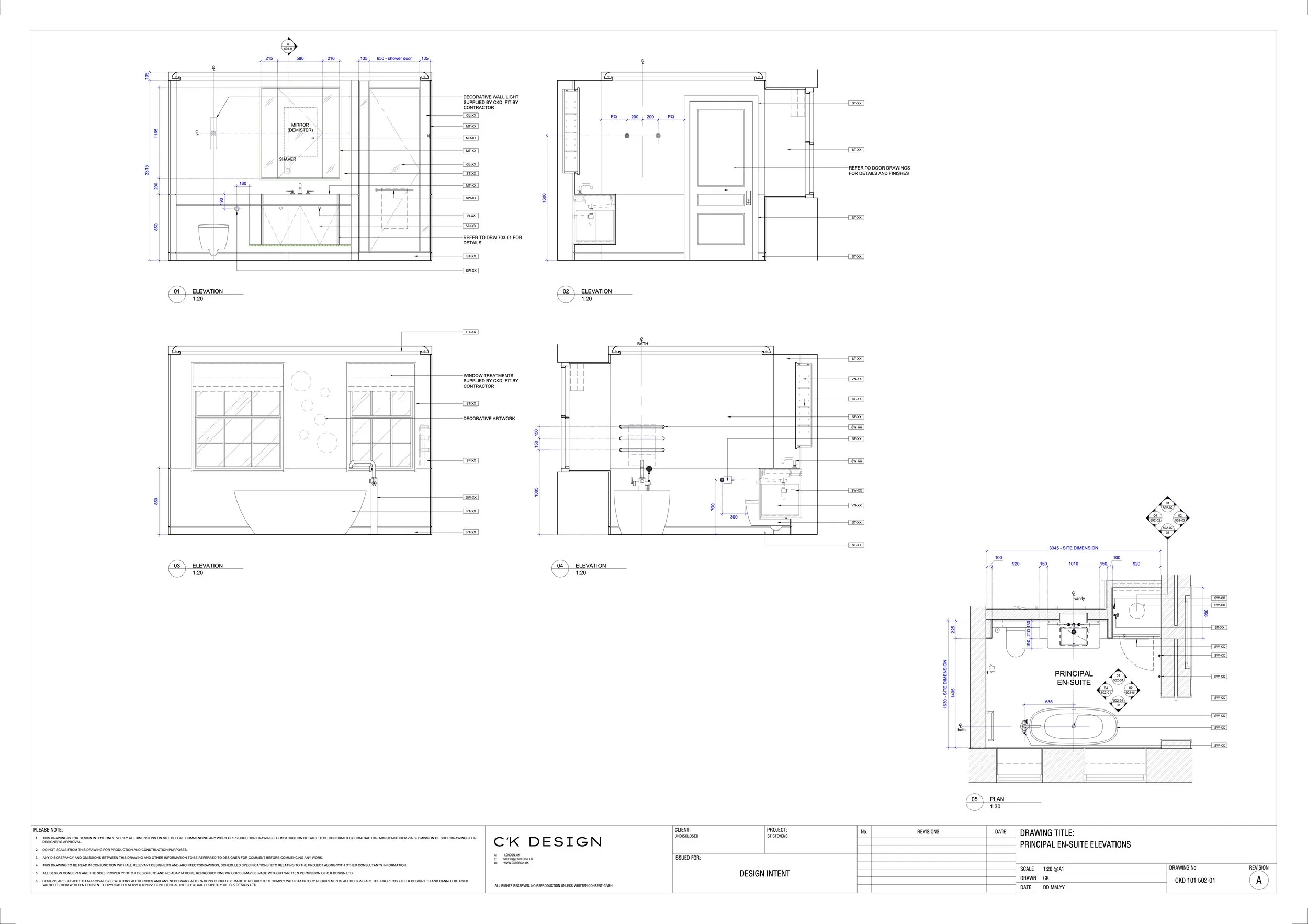
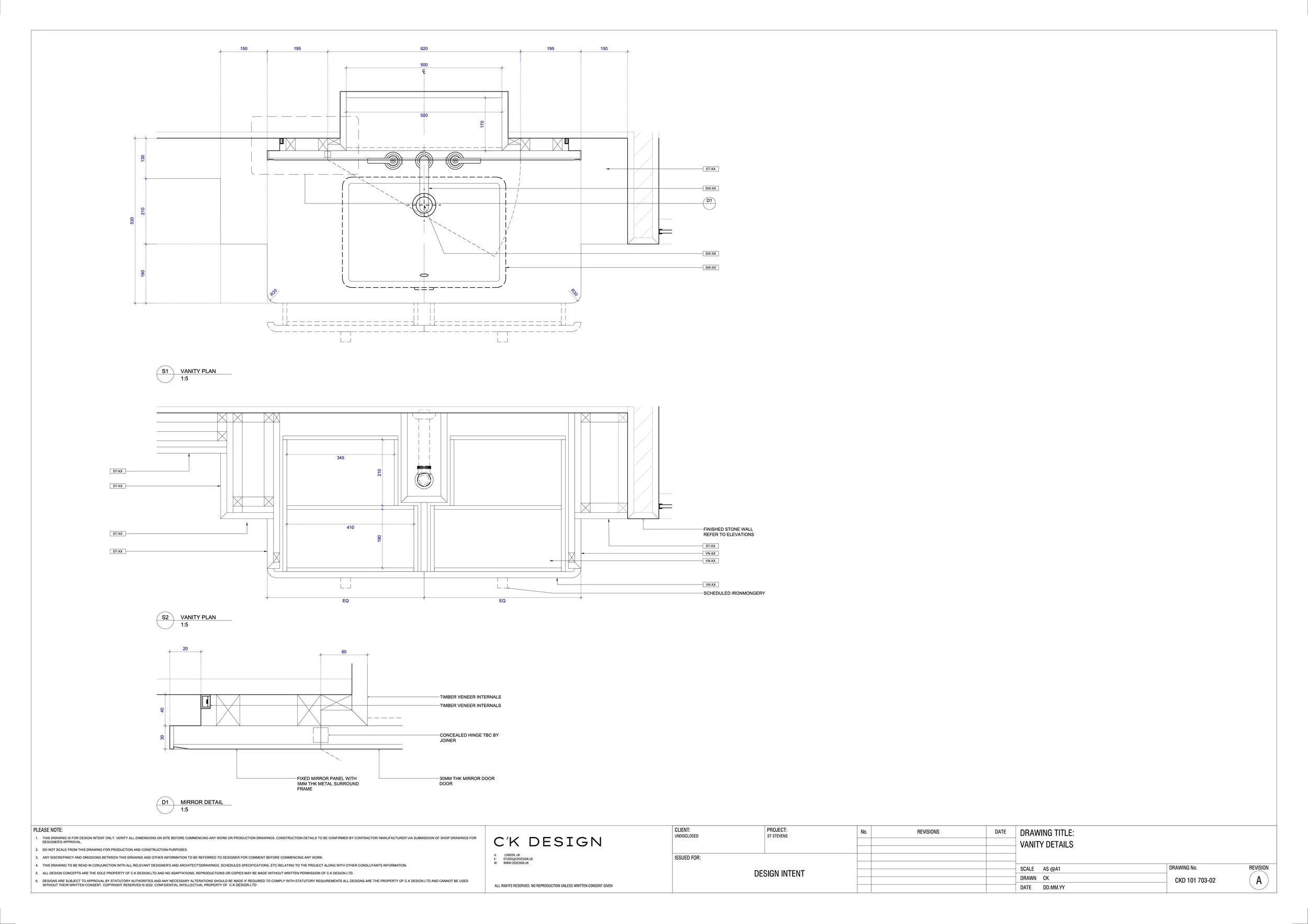
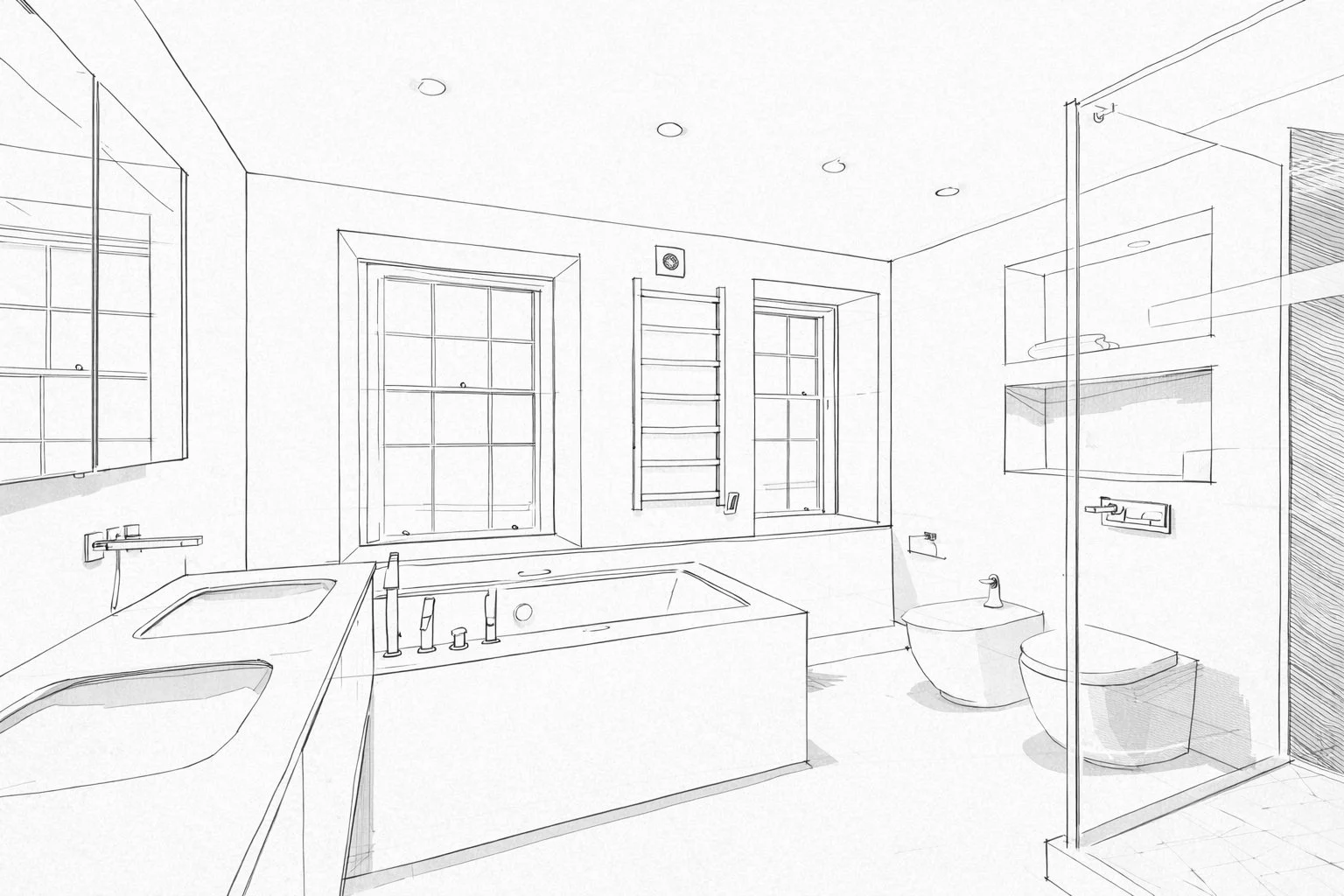
The layout is reorganised to establish a clear alignment between vanity, bath and shower, introducing order across the room.
Joinery and sanitaryware are composed as a single elevation, removing the fragmentation present in the existing arrangement.
Material changes are controlled to reinforce this alignment, creating a unified and legible surface.
12 — Spatial Experience
Principal En-suite
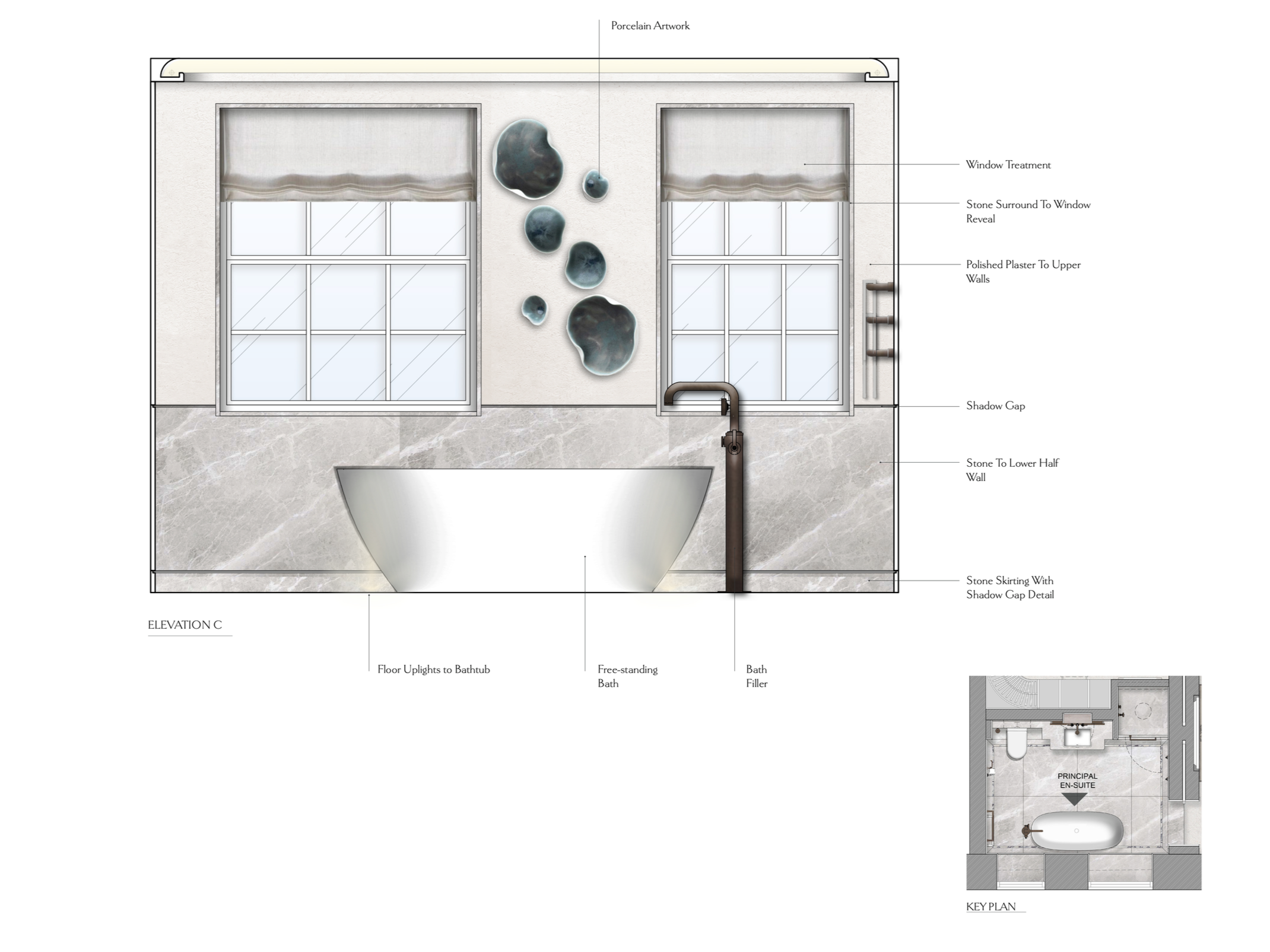
Window Wall
The bath is positioned to complete the overall composition of the room, reinforcing a sense of balance across the elevation.
A freestanding bath preserves visual lightness within a constrained footprint, avoiding the heaviness of built-in elements.
Material transitions are simplified to maintain a calm, continuous elevation.
13 — Spatial Experience
Principal En-suite
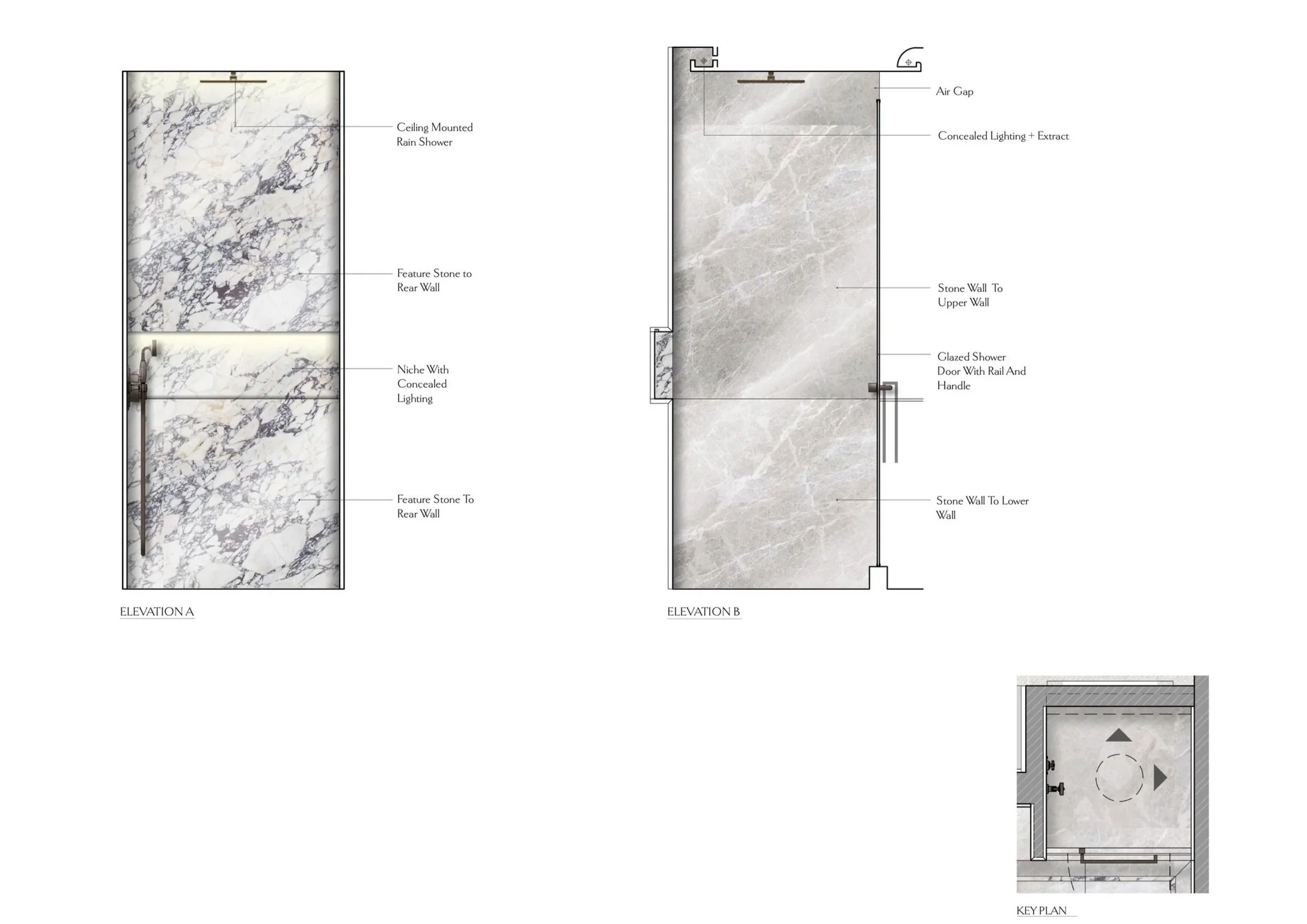
Shower Enclosure
The enclosure is designed as a clean, frameless volume to reduce visual weight within the room. Stone is used continuously across walls to create a unified surface, with integrated niches and concealed lighting providing both function and depth.
All fittings are aligned and recessed where possible to maintain a quiet, considered finish.
14 — Specification
Sanitaryware Specification
Every fixed element is selected and documented to ensure the design is buildable and completely costed. Sanitaryware is chosen as part of the architecture, scale, proportion and finish considered against the space before any supplier is approached.
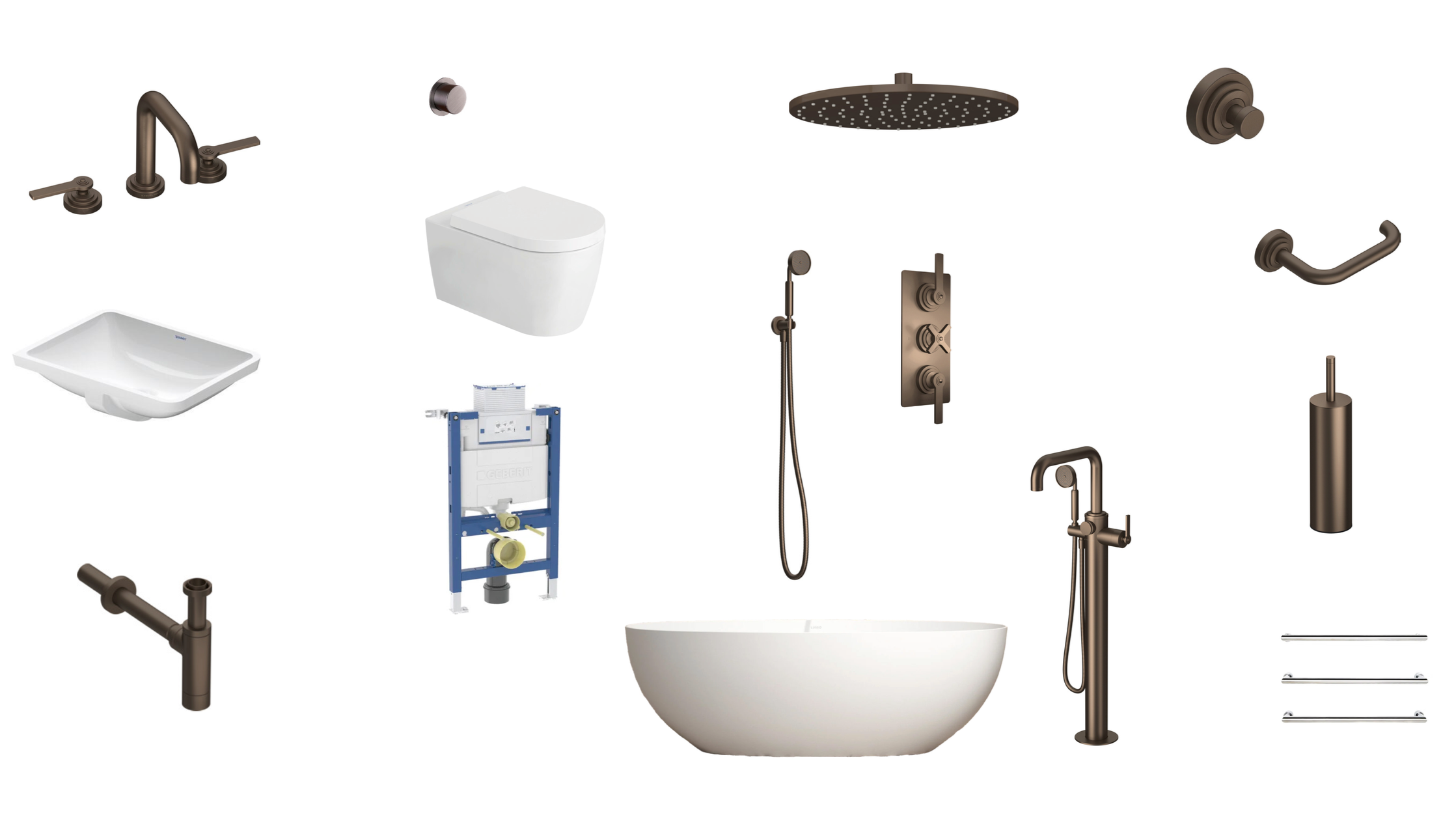
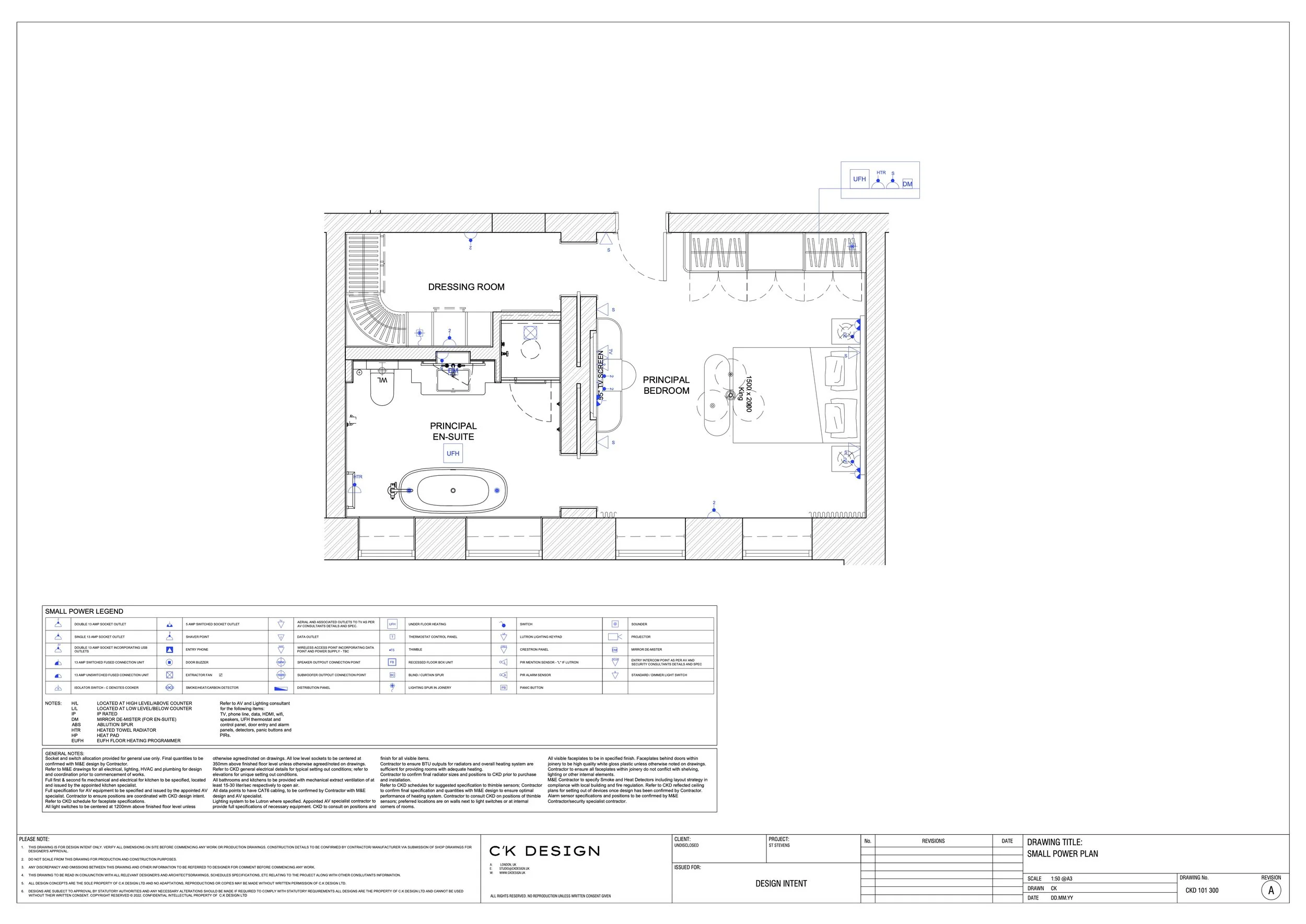
All elements are resolved to construction level prior to issue, ensuring clarity in dimensions, material junctions and integration with lighting and services.
Drawings are developed as a coordinated set, forming the basis for contractor pricing, consultant alignment and fabrication, allowing the design to be executed without ambiguity on site.